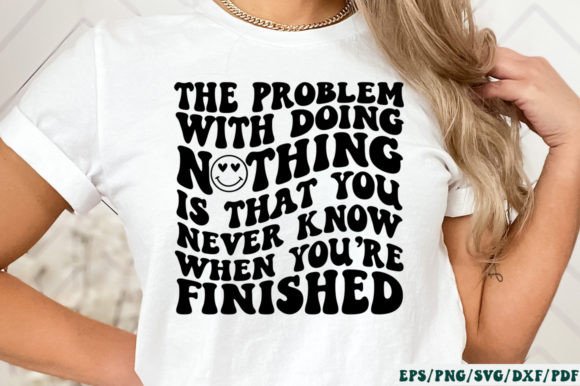
The Problem with Doing Nothing is That Y: Graphics & Crafts
As a brand designer who’s helped over 80 local businesses refine their visual identity—from artisanal candle makers in Asheville to family-run bakeries in Portland—I recently evaluated The Problem with Doing Nothing is That Y for potential use in a real-world branding project. Specifically, I tested it for “Hearth & Hive,” a small-batch honey and herbal syrup brand launching seasonal gift boxes this fall. What stood out immediately wasn’t just its retro-funny charm, but how thoughtfully it bridges playful personality with functional design flexibility.
A First Impression That Feels Handmade—Not Hokey
At first glance, The Problem with Doing Nothing is That Y reads as warm, witty, and intentionally imperfect—think hand-lettered chalkboard energy meets mid-century typography. It’s not sleek or sterile; it’s got subtle texture, uneven baseline alignment, and a slightly off-kilter rhythm that signals authenticity. This isn’t corporate clipart—it’s a graphic design asset built for brands that want to feel human, grounded, and locally rooted. For Hearth & Hive, it landed perfectly: friendly enough for farmers’ market signage, distinctive enough for shelf appeal, and expressive enough to complement their earthy, botanical brand identity.
Where It Adds Real Value Across Local Business Touchpoints
This asset isn’t just decorative—it’s a versatile tool for strengthening small business branding across physical and digital channels:
- Product labels: Used as a secondary accent on Hearth & Hive’s amber glass syrup bottles—scaled down beside the main logo—to reinforce tone without competing with regulatory text.
- Packaging design: Printed as a foil-stamped motif on kraft gift box lids and tissue paper wraps, adding tactile charm without requiring full-color printing.
- Thank-you cards & hang tags: Paired with a clean sans serif body font, it elevated handmade packaging from “cute” to “considered.”
- Social media graphics: Resized and layered over lifestyle photos in Canva—its bold outlines held up beautifully even at Instagram Story dimensions.
- Seasonal campaign visuals: Adapted into a limited-edition holiday sticker sheet (using the included SVG and PNG files), then applied to mailer envelopes and in-store displays.
How It Strengthens Brand Presentation—Practically
For local businesses competing on crowded shelves or scrolling feeds, consistency and clarity are non-negotiable. The Problem with Doing Nothing is That Y supports that by:
- Creating a stronger first impression—its voice cuts through visual noise;
- Improving product recognition—customers begin associating its rhythm and styling with Hearth & Hive’s warmth;
- Supporting clearer visual hierarchy—when used as an accent (not a headline), it guides attention toward key information;
- Building more consistent brand identity—applied across stickers, labels, and digital banners, it acts as a unifying thread;
- Boosting customer trust—its craftsmanship cues professionalism, even in a playful context;
- Adding polish to marketing visuals—especially when layered thoughtfully over photography or textured backgrounds.
Best Uses: Where This Graphic Design Asset Shines
It works exceptionally well as:
- A decorative brand element on product mockups (tested successfully on matte-finish candle jars and ceramic soap dish labels);
- A hero graphic for seasonal promotions—especially around back-to-school, spring renewal, or cozy autumn themes;
- An accent in boutique visuals—think window decals, shelf talkers, or receipt tape prints;
- A printable design for thank-you cards, recipe inserts, or care instructions inside handmade product packaging;
- A social media campaign graphic—its retro-funny tone resonates strongly with Gen X and millennial audiences seeking sincerity over slickness.
Use With Intention—Not Everywhere
This isn’t a universal solution. As a commercial design professional, I advise caution when:
- Applying it to formal corporate branding—its personality clashes with law firms, financial advisors, or medical practices;
- Scaling it too small—on ingredient-heavy food labels under 1” tall, legibility suffers;
- Placing it near legal disclaimers or fine print—its visual weight can unintentionally distract;
- Using it on low-contrast backgrounds (e.g., light gray on white)—the PNG transparency holds up, but readability drops;
- Integrating it into luxury minimalist brands—its expressive quirks contradict restrained aesthetics;
- Letting it compete with primary logo or core messaging—always treat it as supporting cast, never lead actor.
Designer Notes You Can’t Skip
Before committing to The Problem with Doing Nothing is That Y in your next local business project, test it rigorously:
- Print it on real packaging mockups—not just screen previews—to assess color fidelity and scale;
- Check black-and-white usage: Does it retain character when converted to grayscale? (It does—thanks to strong line weight.)
- Preview it on small labels at actual size—especially if you’re using it for jar seals or tea bag tags;
- Test it with your brand palette: Does it harmonize with your primary and secondary colors—or clash?
- Compare it against competitor packaging: Does it stand out meaningfully, or fade into category cliché?
- Inspect SVG editability: The vector paths are clean and grouped logically—ideal for customizing stroke weight or spacing in Illustrator;
- Verify PNG transparency: The included PNGs have crisp alpha channels—no fringing on textured backgrounds;
- Test font pairings: It pairs surprisingly well with serif (Merriweather), sans serif (Inter), script (Dancing Script), and display fonts (Bebas Neue)—but avoid overly ornate scripts that muddy the retro vibe;
- Confirm commercial licensing: Yes—it includes a standard commercial license suitable for client work, physical product sales, and digital marketing assets.
Ultimately, The Problem with Doing Nothing is That Y is more than a Retro Funny Quote SVG Download—it’s a thoughtful, production-ready graphic design asset for small business branding that values authenticity over automation. When used with intention, it helps local businesses, handmade sellers, and creative entrepreneurs communicate personality, build recognition, and connect with customers—not through perfection, but through presence.